
From the dusty corners of early internet message boards to the hyper-fast algorithms of modern social media, internet culture has evolved at a dizzying pace. At the absolute heart of this digital revolution is the internet meme. Memes are the universal language of the web, capturing shared human experiences, absurd humor, and cultural shifts in a single image, video, or phrase.
But how well do you actually know the history of the viral internet memes that have defined our screens over the last few decades?
Welcome to the ultimate meme trivia guide. We are taking a trip down memory lane to explore the origins, evolution, and secret histories of the most iconic popular memes from the dawn of the internet to the present day. Test your knowledge, unlock some serious digital nostalgia, and see if you are a true master of meme culture.
The Dawn of Digital Humor: The Pre-2010 Classics
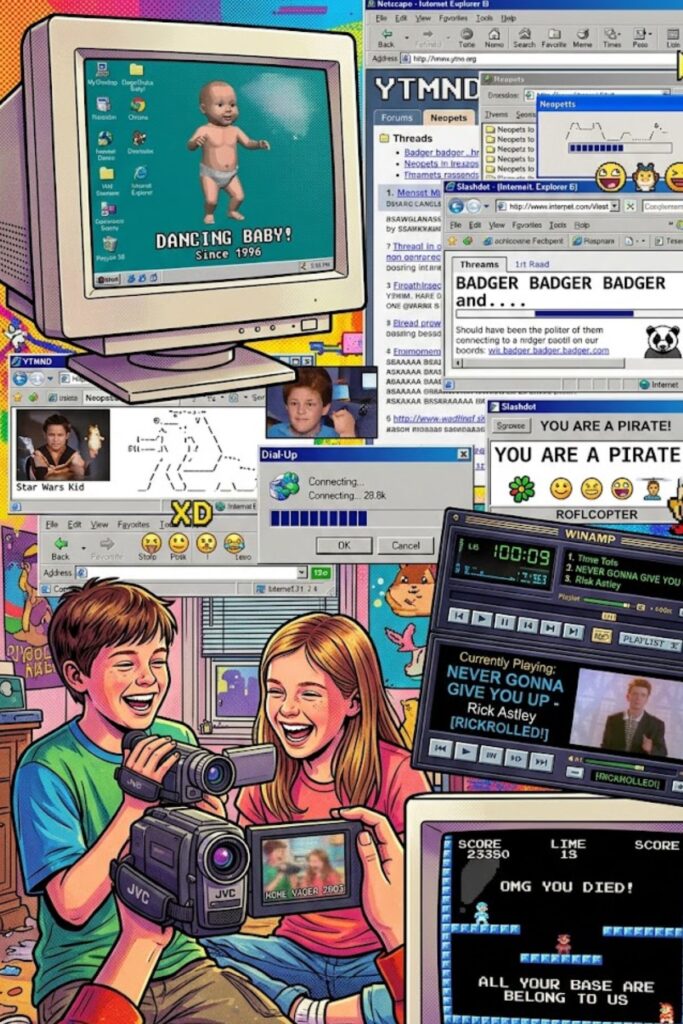
Before social media algorithms decided what we laughed at, memes spread through chain emails, internet forums, and early video-sharing sites. These pieces of classic internet history laid the groundwork for everything we scroll through today.
- The Dancing Baby (1996): Widely considered one of the very first viral internet memes, this creepy yet mesmerizing 3D-rendered infant danced its way across the early web and even landed a cameo on the TV show Ally McBeal.
- All Your Base Are Belong To Us (2001): A glorious example of a broken English translation from the 1989 Sega Genesis game Zero Wing. It became a foundational text for early gaming memes.
- The Rickroll (2007): What started as a classic bait-and-switch prank on 4chan turned Rick Astley’s 1987 hit “Never Gonna Give You Up” into the ultimate digital trap. To this day, Rickrolling remains one of the longest-running pranks in internet history.
- Charlie Bit My Finger (2007): Long before TikTok dances, two young British brothers captured the hearts of millions in a simple 56-second clip that became one of the most-viewed early YouTube videos.
The Golden Age of Image Macros: 2010–2015
The early 2010s introduced a highly structured format that dominated websites like Reddit, Tumblr, and Facebook: the image macro. Featuring the distinct Impact font, these relatability memes gave specific archetypes a permanent face.
Advice Animals and Relatable Faces
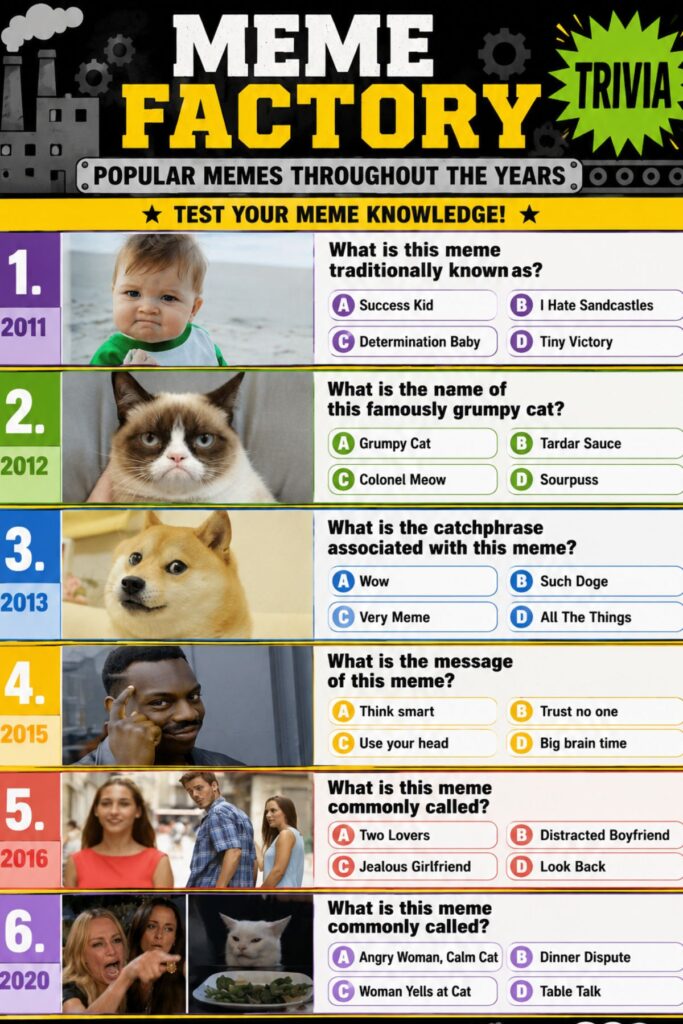
- Grumpy Cat (2012): A mixed-breed cat named Tardar Sauce became the official mascot of internet cynicism. Her permanently frowning face launched a massive commercial empire, including merchandise, books, and a movie.
- Doge (2013): An innocent picture of a Shiba Inu named Kabosu, paired with colorful Comic Sans text showcasing internal monologue (“much wow,” “so scare”), birthed a viral dog meme so powerful it eventually inspired a multi-billion dollar cryptocurrency.
- Distracted Boyfriend (2015): A stock photo shot by photographer Antonio Guillem in Barcelona became the ultimate template for infidelity, disloyalty, and shifting priorities.
The Rise of Surrealism and Vine Energy: 2016–2020
As internet users grew older, internet humor became increasingly abstract, fast-paced, and self-referential. The short-form video platform Vine revolutionized how we consumed video memes, while static images leaned heavily into deep-fried, surreal aesthetics.
- Harambe (2016): Following a tragic incident at the Cincinnati Zoo, a silverback gorilla was transformed into an ironic, immortal deity of pop culture internet humor, showing just how weird the web could get.
- Mocking SpongeBob (2017): Taken from a 2012 episode of the classic cartoon, this image of SpongeBob bending over paired with aLtErNaTiNg CaPs became the definitive universal sign for mocking an annoying opinion.
- Woman Yelling at a Cat (2019): This legendary split-screen pairing brought together Taylor Armstrong from The Real Housewives of Beverly Hills and a confused white cat named Smudge sitting in front of a plate of vegetables.
The TikTok Era and Modern Absurdism: 2021–Present
Today, the lifetime of a trending internet meme is shorter than ever. What is wildly popular on a Tuesday can be completely forgotten by Friday afternoon. Driven by rapid audio trends and complex algorithms, modern viral humor relies heavily on soundbites and hyper-specific subcultures.
- Bernie Sanders’ Mittens (2021): A cozy, practical wardrobe choice by the Vermont Senator at the 2021 Presidential Inauguration instantly turned into a template, placing a seated, bundled-up Bernie into historical paintings, movie scenes, and landmarks worldwide.
- The “Corn Kid” (2022): A wholesome interview on recess with a young boy named Tariq singing his praises for corn was turned into an infectious autotuned song that completely hijacked social media feeds for months.
- Pedro Pascal Eating a Sandwich (2023): A casual moment from a filming break became the internet’s go-to visual for existential dread, mid-day spacing out, or just quietly contemplating life choices over lunch.
Ultimate Meme Trivia Check: Test Your Digital IQ
Think you know your internet history? Let’s break down some of the most fascinating, mind-blowing facts behind the images that live rent-free in our heads.
| Meme Name | Real Identity / Source | Fun Fact |
| Success Kid | Sammy Griner (Photograph taken in 2007) | The viral fame helped the family raise over $100,000 on GoFundMe to fund a successful kidney transplant for Sammy’s father. |
| Hide the Pain Harold | András Arató (Hungarian electrical engineer) | András initially hated the internet attention but eventually embraced his viral stock photo fame, becoming a massive global celebrity and TEDx speaker. |
| Disaster Girl | Zoe Roth (Photograph taken in 2005) | In 2021, Zoe sold the original copy of her iconic house-burning smirk photograph as an NFT for a staggering $500,000 to help pay off student loans. |
| Kombucha Girl | Brittany Broski (TikTok review in 2019) | Her rapid-fire facial transitions between disgust and appreciation turned her into an instant superstar, launching a massive career in entertainment. |
Why Do Certain Memes Explode Vertically?
What separates a temporary inside joke from a massive global piece of viral internet culture? It usually comes down to three distinct pillars:
- Infinite Adaptability: A great meme is a template, not a static joke. It acts as a blank canvas where anyone can inject their own personal context, hobbies, or frustrations.
- The Relatability Factor: The best humorous templates tap into micro-emotions we all feel but don’t always say out loud—like the quiet panic of seeing a missed call from your mom or the joy of canceling weekend plans.
- Perfect Timing: Many of history’s biggest memes exploded because they perfectly captured the cultural mood or anxieties of a specific historical moment.
Final Thoughts: The Ever-Changing Digital Landscape
Memes are far more than just silly pictures we use to avoid working; they are a living, breathing historical record of how humanity communicates in the digital age. They cross geographic boundaries, break down language barriers, and bring complete strangers together through the simple act of a shared laugh.
The next time you share a relatable photo template or reference a viral soundbite with your friends, remember that you are actively participating in a rich, chaotic, and beautiful history of modern internet folklore. Stay curious, keep scrolling, and never stop laughing at the brilliant absurdity of the web.