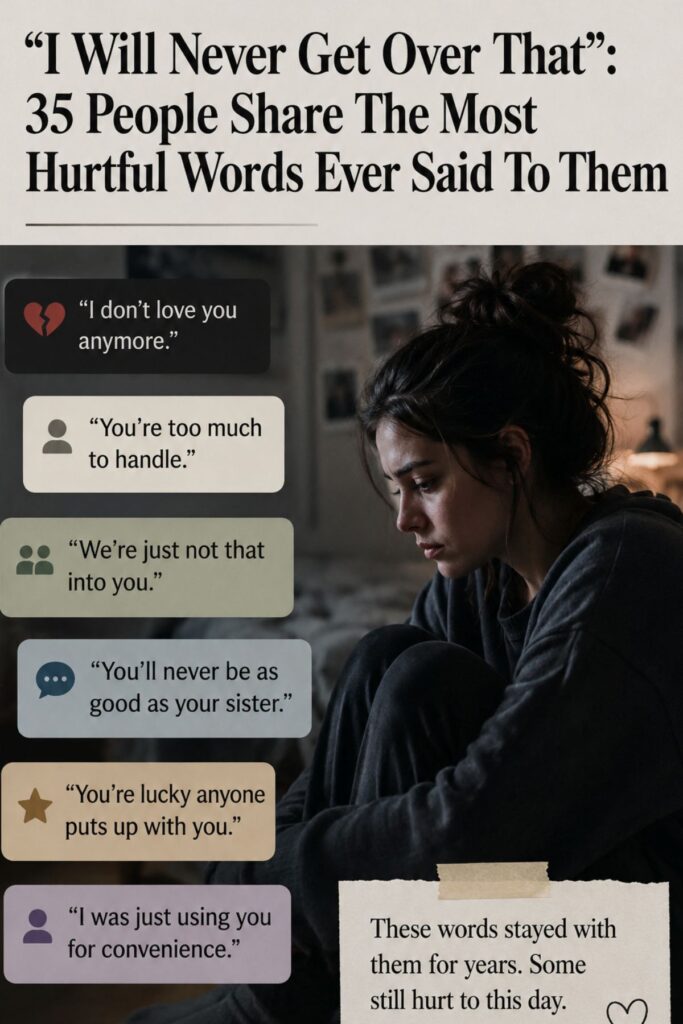

Physical wounds heal, leaving behind scars that fade with time. But words? Words have a terrifying kind of permanence. A single sentence, delivered with precision or utter carelessness, can alter the trajectory of a person’s life, echoing in their mind decades after it was spoken.
The internet recently opened a vulnerable floodgate when users began sharing the most hurtful phrases and devastating insults they have ever received. The raw honesty of these accounts highlights a painful truth: some emotional wounds never truly close.
From cutting remarks by parents to cold rejections from romantic partners, here are 35 chilling examples of verbal cruelty that people admit they will never get over.
The Deepest Cuts: Cruelty from Parents and Family
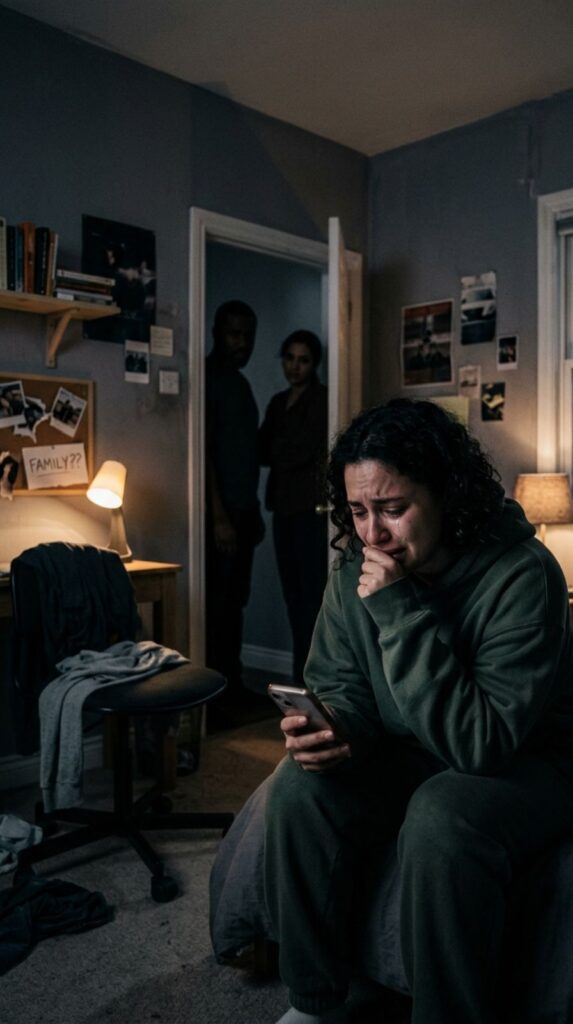
We look to our families for unconditional love and safety. When they are the ones wielding the blade, the psychological damage runs incredibly deep, often shaping our childhood trauma well into adulthood.
- 1. The Product of Regret: “My mother looked at me during an argument when I was 14 and said, ‘If I could go back in time, I would have made sure you were never born. You ruined my youth.'”
- 2. The Second-Place Sibling: “My dad told me on my graduation day, ‘It’s a shame your brother didn’t get your grades. He actually would have done something useful with a degree.'”
- 3. The Burden of Existence: “When asking my parents for help during a financial crisis, my father sighed and said, ‘You have been a financial and emotional drain on this family since the day you arrived.'”
- 4. The Conditional Love: “My religious mother told me when I came out, ‘I love the child you used to be, but I cannot stand the person you have chosen to become.'”
- 5. The Unwanted Reflection: “My mom stared at me while I was trying on clothes and muttered, ‘Every day you look more and more like the mistake I made with your father.'”
The Cold Death of Romance: Heartbreak and Betrayal
Romantic partners are supposed to hold our hearts with care. When a relationship sours, the emotional abuse or parting words can completely shatter a person’s self-esteem.
- 6. The Settling Truth: “Right before he broke up with me, my boyfriend of four years said, ‘I never actually loved you. You were just convenient and safe until someone better came along.'”
- 7. The Body-Shaming Scar: “I was feeling insecure about my weight, and my ex-husband looked at me and said, ‘I have to close my eyes and pretend you’re someone else just to get through intimacy with you.'”
- 8. The Erasure of Worth: “After sacrificing my career to put him through medical school, he looked at me and said, ‘We’ve outgrown each other. You don’t intellectually stimulate me anymore.'”
- 9. The Pity Relationship: “My college girlfriend told me, ‘I only started dating you because I felt sorry for how lonely you looked. It was a charity project that went on too long.'”
- 10. The Ghost of an Ex: “During a heated discussion, my partner told me, ‘You are just a placeholder. No matter what you do, you will never hold a candle to my first love.'”
The Psychological Anatomy of Words: Why They Stick
Before we continue through the list, let’s look at the science of why hurtful words have such a tight grip on our minds.
- The Negativity Bias: Humans are evolutionarily wired to remember negative experiences more vividly than positive ones as a survival mechanism. One insult can easily outweigh fifty compliments.
- The Trust Paradox: The closer you are to the person speaking, the deeper the words penetrate. We lower our psychological defenses around loved ones, making their criticisms exceptionally lethal.
- Internalization: When we hear a cruel remark repeatedly—or during a vulnerable developmental stage—our brains begin to accept it as an absolute truth, turning it into a toxic core belief.
Casual Cruelty: High School and Academic Scars
Peers and authority figures can inflict massive damage during our formative years, leaving us with lingering social anxieties and imposter syndrome.
- 11. The Teacher’s Verdict: “I was struggling with math in middle school, and the teacher stood over my desk and said to the class, ‘Pay attention to how poorly Sarah is doing if you want to avoid a future of flipping burgers.'”
- 12. The “Ugly” Realization: “I overheard the popular boys in high school talking about me. One of them said, ‘She’d actually be pretty if you put a bag over her face and changed everything about her personality.'”
- 13. The Dream Crusher: “When I told my high school guidance counselor I wanted to be a writer, she laughed and said, ‘Let’s look at realistic goals. You don’t have the intellect for creative arts.'”
- 14. The Exclusion Rule: “I asked a group of girls if I could sit with them at lunch. One looked up and said, ‘Our table has a specific aesthetic, and you don’t fit it.'”
- 15. The Prom Mockery: “My prom date accepted my invitation as part of a dare. When I found out, he told me, ‘Relax, it’s the only way someone like you was ever going to get a date to a dance.'”
Professional Sabotage: Cruelty in the Workplace
Corporate life can be a breeding ground for passive-aggressive remarks that instantly trigger professional burnout and destroy workplace confidence.
- 16. The Invisible Employee: “My manager told me during a review, ‘You do good work, but you’re utterly replaceable. If you walked out tomorrow, your desk would be filled before your chair got cold.'”
- 17. The Lack of Value: “When I asked for a well-deserved raise, the director said, ‘You should be paying us for the privilege of having this company’s name on your resume.'”
- 18. The Token Hire: “A senior colleague told me after I got a major promotion, ‘Don’t get too arrogant. We all know you only got this role to satisfy a diversity quota.'”
- 19. The Intellectual Insult: “During a team meeting, a supervisor cut me off and said, ‘Let’s let the adults talk. Your ideas are always a bit too elementary for this room.'”
- 20. The Career Cap: “My mentor looked at my five-year plan and said, ‘You have grand ambitions for someone with such mediocre talents.'”
Backhanded Compliments and Passive Aggression
Sometimes, the most toxic phrases are wrapped in a polite bow, making them insidious forms of gaslighting and manipulation.
- 21. The “Brave” Backhanded Compliment: “A friend looked at my outfit and said, ‘I love how brave you are for wearing something so unflattering. I could never have that kind of confidence.'”
- 22. The Marriage Doubt: “When I got engaged, an aunt whispered to me, ‘Make sure you cherish him. Men with his looks and income don’t usually stay with girls like you for long.'”
- 23. The Hidden Disgust: “My grandmother looked at my acne and said, ‘It’s such a shame what happened to your face. You used to be the pretty sibling.'”
- 24. The Personality Critique: “A close friend told me over coffee, ‘You’re the kind of person people love in small doses, but you quickly become exhausting to be around.'”
- 25. The Success Shamer: “When I bought my first apartment, a family member remarked, ‘Must be nice to have a job where they pay you so much for doing so little real work.'”
The Absolute Unforgivable: Top 10 Most Devastating Quotes
These final ten entries represent the absolute pinnacle of verbal devastation—phrases that completely redefined how these individuals viewed their own self-worth.
- 26. On Grief: “When my husband passed away, someone told me at the funeral, ‘Well, at least you don’t have to worry about his medical bills anymore. Every cloud has a silver lining.'”
- 27. On Mental Health: “I opened up to a partner about my depression, and they snapped, ‘Your sadness is a black hole. You are draining the joy out of my life, and I am sick of babysitting you.'”
- 28. On Physical Appearance: “A family member told me after a medical treatment caused hair loss, ‘You look like a ghost of a person. It’s hard to even look at you right now.'”
- 29. On Adoption: “During a teenage rebellion phase, my adoptive dad yelled, ‘This is the thanks we get for rescuing you from a foster care scrapheap?'”
- 30. On Friendship: “My best friend of ten years told me during a falling out, ‘I only stayed friends with you because I liked having someone around who made me look better by comparison.'”
- 31. On Intelligence: “A relative told me when I failed an entrance exam, ‘Don’t worry, the world always needs manual laborers. Not everyone was built for brain work.'”
- 32. On Divorce: “My ex-wife told me as she packed her bags, ‘Marrying you was a decade-long sentence of absolute boredom. I wasted my prime years on a nobody.'”
- 33. On Parentage: “My teenager screamed at me during a fight, ‘You are the worst thing that ever happened to me. I pray I grow up to be the exact opposite of you.'”
- 34. On Potential: “An old coach told me after a bad game, ‘You have a million-dollar dream with a ten-cent work ethic. You’re going to be a quitter your whole life.'”
- 35. The Ultimate Dismissal: “The last words my estranged brother ever said to me were, ‘To me, you are already dead. Don’t bother coming to my funeral, because I won’t be at yours.'”
Healing From Verbal Scars: How to Rewrite the Script
Living with the echo of toxic phrases can feel like carrying an invisible weight. While you can never unhear the words, psychological experts offer strategies to dull their power:
- Consider the Source: Cruel words are almost always a reflection of the speaker’s internal rot, insecurity, or malice—not your actual worth.
- Challenge the Internalized Narrative: When the insult loops in your head, actively counter it with objective evidence of your success, kindness, and value.
- Establish Strict Boundaries: Go low-contact or no-contact with individuals who use verbal warfare as a tool for control. You are under no obligation to keep a toxic person in your life, even if they are family.