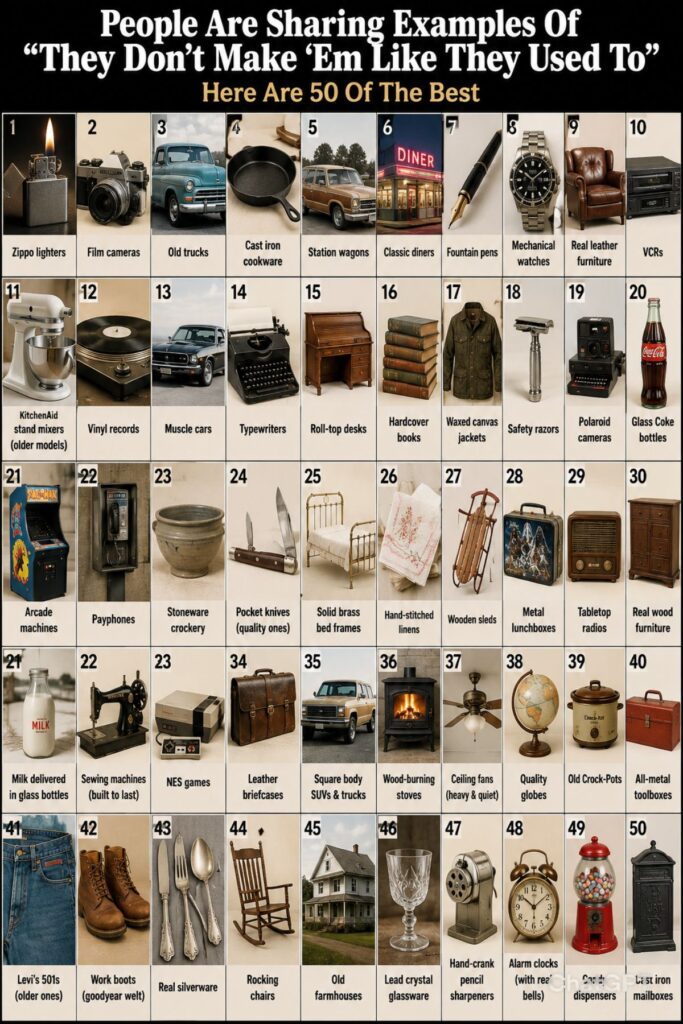

We’ve all been there. You buy a brand-new appliance, use it for two years, and suddenly it’s making a noise like a dying lawnmower. Meanwhile, your grandmother’s avocado-green refrigerator from 1974 is still humming away in the basement, keeping drinks ice-cold without a single complaint.
It’s not just your imagination. Planned obsolescence is a real modern manufacturing strategy. But today, we are celebrating the survivors.
Culled from viral internet threads where people shared real-world proof of vintage product quality, here are 50 of the absolute best examples of things that prove they truly don’t make ’em like they used to.
Kitchen & Household Champions
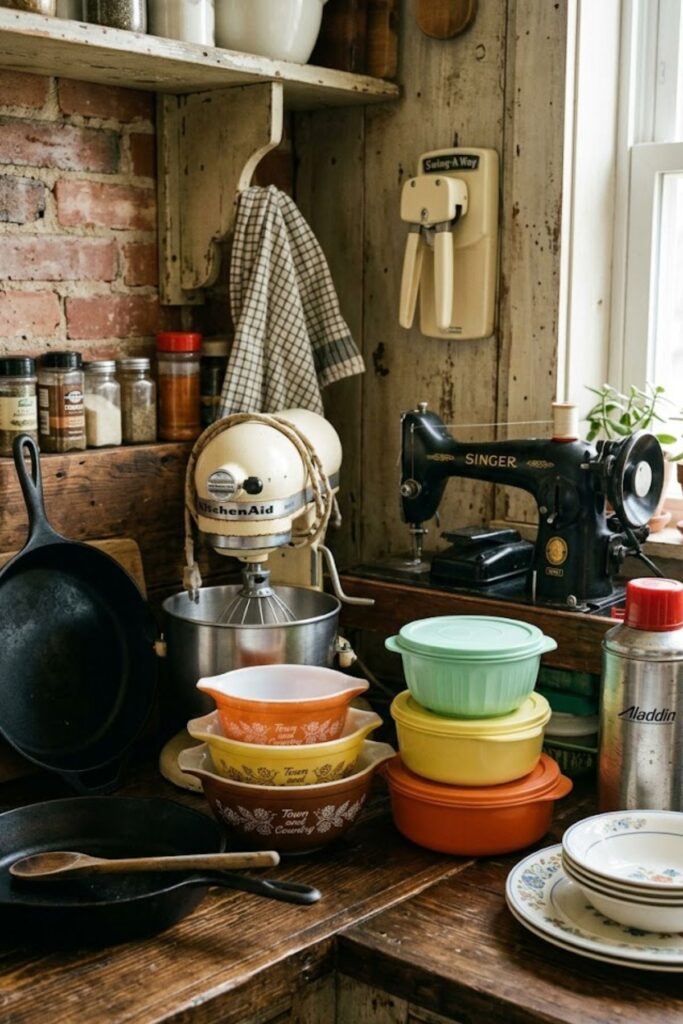
- 1. Cast Iron Skillets Modern cast iron is pebbly and rough. Vintage pans from brands like Griswold or Wagner were machined smooth after casting. They offer a natural non-stick surface that outlives any Teflon pan by centuries.
- 2. The KitchenAid Hobart Mixers Older KitchenAid mixers (specifically those made by Hobart) used solid metal gears. Today’s models often use plastic sacrificial gears that strip under heavy dough loads.
- 3. Pyrex Glassware Vintage Pyrex was made from borosilicate glass, which handles extreme temperature shocks perfectly. Modern Pyrex is mostly soda-lime glass—shatter-prone if you move it from the oven to a cold counter.
- 4. Tupperware The vintage, burping lids from the 1970s sealed like a vault. They didn’t warp in the dishwasher or absorb tomato sauce stains like the flimsy containers of today.
- 5. Singer Sewing Machines The heavy, all-metal Singer 221 or 99K models can sew through thick leather and denim without skipping a beat. Modern budget machines are mostly plastic housing and digital chips waiting to fail.
- 6. Steel Thermos Bottles Vintage Stanley or Thermos flasks utilized heavy-gauge steel and deep vacuum seals. Dropping them from a truck just added character; it didn’t break the vacuum.
- 7. Corelle Dinnerware Old Corelle plates made of Vitrelle glass are practically bounce-proof. Drop one on a tile floor, and it bounces. Drop a modern ceramic plate, and you’re sweeping up shards.
- 8. Heavy-Duty Can Openers The wall-mounted Swing-A-Way can openers lasted for forty years. Modern handheld ones dull or misalign within six months of opening soup cans.
Appliances That Defied Time
- 9. Mid-Century Refrigerators Brands like Frigidaire and General Electric built fridges in the 1950s that used industrial-grade compressors. They pulled more electricity, sure, but they were built to survive an apocalypse.
- 10. Speed Queen Washers While most modern washers are computers disguised as appliances, older Speed Queens used mechanical timers and heavy transmission systems that just washed clothes without error codes.
- 11. Box Fans Vintage Lasko or Lakewood metal box fans moved air like a hurricane and featured motors you could easily oil and maintain yourself.
- 12. Kirby Vacuums A 1980s Kirby Heritage is made of cast aluminum. It’s heavy enough to use as a weapon, but the suction power remains unmatched, and every single part is repairable.
- 13. Toasters with Mechanical Clocks Old Sunbeam Radiant Control toasters lowered the bread automatically using a thermal strip—no buttons, no microchips, just pure thermodynamic brilliance.
- 14. Rotary Phones The Western Electric Model 500 was built like a tank because the phone company owned them and didn’t want to pay for repairs. You could drop it down the stairs, and it would still dial perfectly.
Tools & Outdoor Gear
+---------------------+-------------------------+-------------------------+
| Feature             | Vintage Tools (Pre-1990)| Modern Tools (Post-2010)|
+---------------------+-------------------------+-------------------------+
| Primary Material    | Forged Steel / Wood     | Stamped Metal / Plastic |
| Repairability       | High (User-serviceable) | Low (Sealed units)      |
| Lifespan            | Lifetimes               | 2 to 5 Years            |
+---------------------+-------------------------+-------------------------+
- 15. Craftsman Hand Tools Before the brand was sold and production shifted, vintage Craftsman tools featured forged steel that never bent or snapped under high torque.
- 16. Coleman Coleman Lanterns & Stoves The classic green dual-fuel camping stoves run forever. If they get clogged, you just swap out a $5 generator tube, and you’re good for another twenty camps.
- 17. Axes and Hatchets Older Plumb or Collins axe heads used high-carbon steel that held a razor edge. Modern big-box store axes often use softer, inferior metal alloys that chip easily.
- 18. Bench Vises An old American-made Wilton bullet vise can withstand tons of clamping pressure without cracking. Modern cast-iron imports frequently snap under heavy load.
- 19. Pocket Knives Vintage Buck 110 folding knives or old carbon-steel Case knives hold an edge beautifully and develop a gorgeous patina, rather than rusting out or loosening at the pivot.
- 20. Solid Wood Workbenches Old workshop benches were made of solid maple or oak 4x4s. Modern equivalents are often particle board with a faux-wood veneer that sags under a heavy toolbox.
Fashion & Wearables with True Longevity
- 21. Levi’s 501 Jeans Vintage Levi’s were made of heavyweight 100% cotton denim without the elastane/stretch blends used today. They broke in over years and became structural armor.
- 22. Goodyear Welted Boots Older combat boots or work boots used thick, full-grain leather and a Goodyear welt, meaning you could resole them five times over before the upper wore out.
- 23. Mechanical Watches A vintage Seiko or Omega watch relies entirely on springs and gears. With a simple cleaning every decade, they will outlive any smartwatch by generations.
- 24. Leather Jackets Mid-century motorcycle jackets used steerhide so thick it could stand up on its own. Modern fashion jackets use split leather that tears like paper.
- 25. Wool Blankets Vintage military or Hudson’s Bay wool blankets offer natural insulation and flame resistance. They don’t pill or thin out like modern synthetic fleece blankets.
- 26. Solid Brass Zippers Older Talon or YKK brass zippers rarely split or lost teeth, unlike the lightweight nylon coiled zippers found on modern jackets.
- 27. Ray-Ban Wayfarers Vintage Bausch & Lomb Ray-Bans used real impact-resistant mineral glass lenses and heavy acetate frames, giving them a premium weight and clarity.
Furniture & Home Construction
- 28. Solid Wood Furniture Mid-century modern dressers were built with solid walnut or oak joinery. Modern flat-pack furniture relies on compressed sawdust and dowels that crumble during a move.
- 29. Solid Brass Hardware Old doorknobs and hinges were solid, heavy brass. Modern hardware is often hollow zinc or aluminum painted with a brass-colored coating that flakes off.
- 30. Cast Iron Bathtubs An old clawfoot tub retains heat for hours because of its massive thermal bulk. Modern acrylic tubs flex when you stand in them and lose heat instantly.
- 31. Old-Growth Lumber Houses built 100 years ago used old-growth wood, which is incredibly dense, sap-rich, and naturally resistant to termites and rot. Modern framing lumber grows fast and warps easily.
- 32. Plaster Walls Traditional lath and plaster walls provide incredible soundproofing and fire resistance compared to standard modern drywall.
- 33. Hardwood Flooring Vintage tongue-and-groove oak floors can be sanded and refinished ten times over. Modern laminate floors have a wear layer so thin it cannot be sanded at all.
Electronics & Media
- 34. Audio Receivers 1970s stereo receivers from Pioneer, Marantz, or Sansui feature massive transformers and discrete transistors that produce a warm, unmatched analog sound.
- 35. Mechanical Keyboards The IBM Model M keyboard from the 1980s is legendary. Its buckling spring mechanism provides tactile feedback that modern chiclet keyboards cannot replicate.
- 36. Game Consoles You can blow dust out of a Nintendo Entertainment System (NES) cartridge from 1985 and it plays instantly. Modern consoles require massive day-one internet patches just to boot up.
- 37. CRT Televisions An old Sony Trinitron TV might weigh a ton, but it features zero screen latency, making it the holy grail for retro gaming enthusiasts.
- 38. Calculators The HP-12C financial calculator has been in production since 1981 with virtually no design changes because its build quality and layout are flawless.
Automotive & Travel
- 39. All-Metal Car Dashboards Vintage cars featured dashboards made of stamped steel and chrome toggles. They didn’t crack under the hot sun like modern plastic dashboards.
- 40. Mechanical Fuel Pumps Older vehicles used simple, low-pressure mechanical fuel pumps that could be replaced on the roadside with two bolts and a screwdriver.
- 41. Hard-Sided Luggage Vintage Samsonite suitcases from the 1960s could handle being thrown out of a cargo plane. Modern zipper bags frequently tear on the baggage carousel.
- 42. Mercedes-Benz W123 Cars Built in the late 70s and 80s, these diesel cars are legendary for running over 500,000 miles on basic maintenance alone. They were engineered to a standard, not a budget.
- 43. Bicycle Frames Vintage lugged steel bicycle frames (like old Schwinns or Peugeots) absorb road vibrations beautifully and can be bent back into alignment if damaged.
Everyday Items & Miscellany
- 44. Safety Razors A vintage Gillette Fatboy adjustable safety razor uses a single, cheap steel blade. It provides a closer shave and lasts forever, avoiding the overpriced plastic multi-blade cartridge trap.
- 45. Zippo Lighters The classic windproof design hasn’t changed since the 1930s. If it stops working, Zippo fixes it for free under their famous lifetime guarantee.
- 46. Metal Lunchboxes Vintage steel lunchboxes took a beating on the playground and kept your sandwiches safe. Modern fabric lunchbags grow mold and tear at the seams.
- 47. Fountain Pens An old Parker 51 fountain pen writes with a smooth elegance that disposable plastic ballpoints simply cannot match.
- 48. Board Games Vintage editions of Monopoly or Risk featured heavy wooden tokens, thick cardboard boards, and sturdy boxes, compared to the thin paper and cheap plastic used today.
- 49. Scissors Older Wiss or Singer dressmaker shears were made of forged steel that could be resharpened indefinitely. Modern plastic-handled scissors are treated as disposable items.
- 50. Umbrella Frames Vintage umbrellas used heavy steel ribs that could withstand a gale. Modern cheap umbrellas invert and snap the first time they meet a stiff breeze.
Why Did Everything Change?
The shift away from durable goods comes down to consumer demand for lower prices and manufacturing efficiency.
“Price competition drove manufacturers to substitute heavy metals and mechanical parts for lightweight plastics and microchips.”
While modern items are lighter, cheaper, and often safer, we lost something special along the way: repairability. When we buy vintage, we aren’t just buying history; we are buying the peace of mind that comes with knowing an item was designed to outlast us.