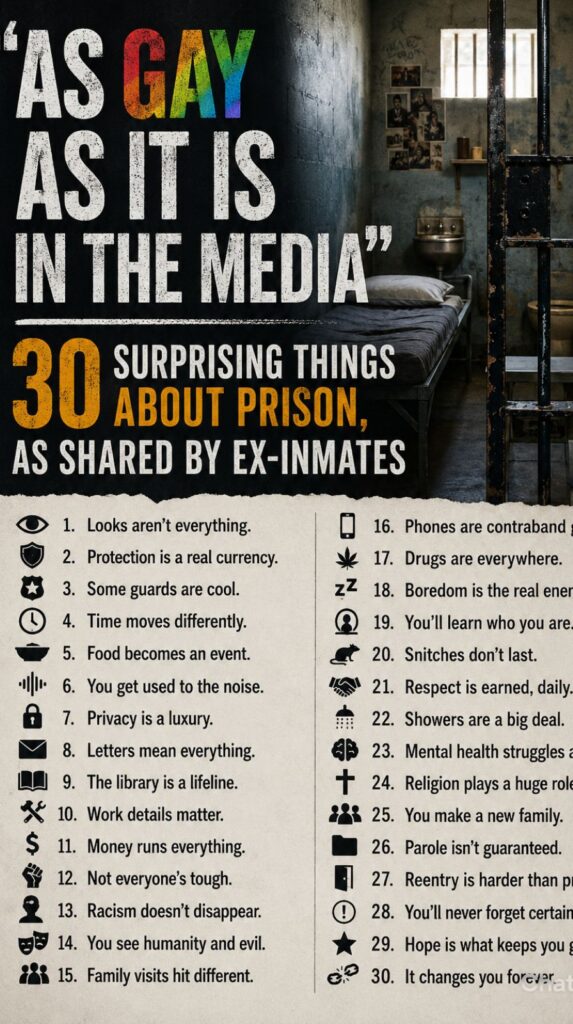

Pop culture has painted a very specific portrait of life behind bars. We’ve watched Orange Is the New Black, Oz, and countless gritty documentaries, leaving us to believe that prison life is nothing but non-stop violence, intense gang standoffs, and dramatic cinematic monologues.
But what happens when you strip away the Hollywood script? When ex-inmates take to forums like Reddit to share their unfiltered, lived experiences, a completely different reality emerges. From highly structured economies built around instant ramen to surprising truths about romance, social dynamics, and mental health, here are 30 surprising things about life inside the correctional system that the media completely distorts or leaves out.
The Untold Reality of Prison Romance & Identity
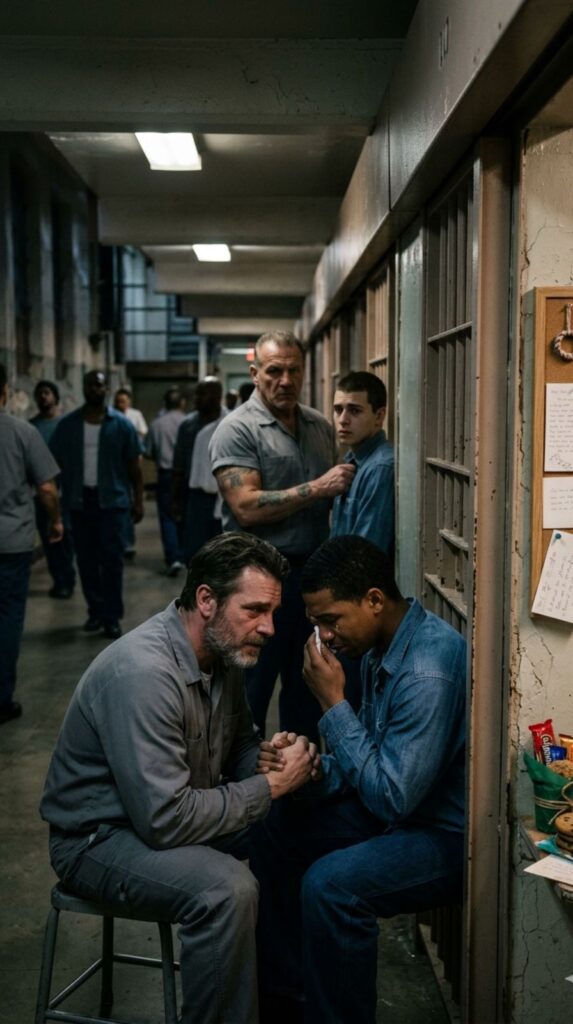
- 1. “As Gay As It Is In The Media”: Hollywood often portrays prison relationships as predatory or entirely non-consensual. However, ex-inmates reveal that genuine, deeply affectionate same-sex relationships are incredibly common. For many, it is less about a change in sexual orientation and more about finding a profound, human connection to survive intense isolation.
- 2. The Concept of “Gay For the Stay”: A widely acknowledged reality behind bars is that fluid sexuality exists. Inmates who identify as strictly heterosexual on the outside frequently enter consensual, romantic relationships while serving time, navigating their identity purely based on their current environment.
- 3. Elaborate Prison Weddings: Lacking legal ceremonies, inmates still find ways to celebrate love. Underground “weddings” take place inside cell blocks, complete with makeshift rings crafted from woven thread or plastic wrappers, and cakes built out of commissary cookies.
- 4. The Protection Economy: Sometimes, entering a relationship with a more established inmate isn’t just about romance; it’s a strategic alliance for safety. This form of prison survival provides vulnerable newcomers with an immediate shield against harassment.
The Complex Underworld of Prison Economies
Move over greenbacks—the financial systems behind bars are hyper-complex and highly volatile.
- 5. Ramen is the New Gold: Ever since smoking bans swept through correctional facilities, cigarettes lost their crown. Today, instant ramen noodles (specifically Maruchan or Top Ramen) are the primary currency. They can buy you anything from a haircut to cell security.
- 6. The Power of “Mackerels”: Along with ramen, pouches of mackerel fillets from the commissary are used as stable currency. They hold their value perfectly because they don’t spoil and are a premium source of protein.
- 7. The “Store” System: Wealthier or business-minded inmates run literal storefronts out of their lockers. They buy commissary goods in bulk and lend them out to desperate inmates at high-interest rates—like charging two soups next week for one soup today.
- 8. High-Stakes Gambling on Basic Sports: Inmates don’t just gamble on poker; they wager their entire weekly food allowance on standard TV broadcasts of local football or basketball games, leading to intense cell-block tension.
Bizarre Culinary Masterpieces (Prison Food Hacks)
- 9. The “Spread” Phenomenon: Prison food is notoriously bland, leading inmates to become culinary geniuses. A “spread” is a communal feast made by mixing crushed ramen, cheese spread, crushed potato chips, and canned meat inside a trash bag, cooked using hot tap water.
- 10. Improvised Stoves (The “Stinger”): To boil water, inmates create a “stinger” by stripping the plastic coating off an electrical wire and attaching it to a razor blade, which is then dropped directly into a cup of water to spark a current. It is incredibly dangerous but widely used.
- 11. Prison Wine (“Pruno”): Crafted secretly in toilets or plastic bags, pruno is made by fermenting leftover fruit, sugar, ketchup, and bread (for the yeast). Ex-inmates universally agree it tastes toxic, but it gets the job done.
The Psychological and Sensory Shocks
- 12. The Deafening, Continuous Noise: The media captures the silence of solitary confinement, but it fails to portray the sheer volume of a standard cell block. The constant banging of steel doors, screaming across tiers, and blaring TVs create an exhausting wall of sound 24/7.
- 13. The Total Absence of True Darkness: For safety and surveillance reasons, prisons never truly turn off the lights. Inmates spend years sleeping under the dim, buzzing glow of emergency night-lights, leading to severe sleep deprivation.
- 14. “Institutionalized” Agoraphobia: After spending years in a tiny concrete box, ex-inmates report feeling physically sick and terrified the first time they step out into an open field or a crowded grocery store post-release.
- 15. The Loss of the Sense of Touch: Aside from violent altercations or formal pat-downs, inmates can go years without experiencing a soft, comforting touch, leading to an intense form of emotional starvation.
Surprising Rules of Etiquette & Social Coexistence
In prison, a breach of politeness isn’t just rude—it can be a death sentence. The social hierarchy is governed by strict, unwritten laws.
- 16. The Toilet Rule: You never, under any circumstances, use the toilet while your cellmate is eating or resting. Violating this basic boundary of cellmate etiquette is one of the fastest ways to start a brutal fight.
- 17. Blindly Minding Your Own Business: If you hear a scuffle, see contraband, or witness an argument, you look at the floor. The golden rule of prison politics is that curiosity is dangerous.
- 18. The TV Room Hierarchy: The television is strictly segregated by gang alignment or race. If your group doesn’t control the remote, you don’t even look toward the screen, let alone ask to change the channel.
- 19. You Never Touch Another Man’s Bed: An inmate’s bunk is their only sovereign territory in the world. Leaning on it, sitting on it, or even brushing past it without permission is viewed as a direct, aggressive challenge.
Hygiene, Health, and Daily Maintenance
- 20. The Mandatory Shower Footwear: Going barefoot in a prison shower is a recipe for disaster. Inmates craft makeshift sandals out of duct tape and cardboard if they can’t afford commissary flip-flops to protect against rampant staph infections.
- 21. Dental Floss Weapons: Standard dental floss is banned in many high-security facilities because inmates can braid it together to create a cheese-cutter style weapon or a rope strong enough to scale a wall.
- 22. The “Chit” Healthcare System: Getting medical attention often requires filling out endless paperwork and paying a small co-pay from a prison account. Many inmates avoid the doctor entirely, relying on underground “street medics” within the blocks.
The Reality of Violence vs. Absolute Boredom
- 23. Boredom is the Real Killer: While Hollywood focuses on riots, ex-inmates reveal that 99% of prison life is soul-crushing, mind-numbing boredom. Days are spent pacing, staring at walls, or counting ceiling tiles.
- 24. The Weaponization of Everyday Objects: From toothbrushes sharpened into shanks to heavy padlocks slid inside gym socks (known as a “lock-in-a-sock”), the level of ingenuity dedicated to self-defense is terrifying.
- 25. The Predictability of Violence: Fights are rarely random. They are calculated results of unpaid debts, broken etiquette rules, or orders passed down from gang leaders. If you stay clean and pay your debts, your risk drops significantly.
Family, Communication, and the Outside World
- 26. The Predatory Phone Rates: Keeping in touch with family is a luxury. Private telecom companies charge astronomical rates for prison phone calls, forcing families into debt just to hear their loved one’s voice.
- 27. The Secret “Contraband” Smartphones: Despite intense guards’ searches, miniature smartphones are smuggled in constantly. They are used to run social media accounts, look at internet porn, or coordinate illegal activities outside.
- 28. The Heartbreak of the Visiting Room: Seeing your family in a sterile, monitored room where you can barely touch them is often described as far more painful than spending a week in solitary confinement.
Reentry and the Invisible Shackles
- 29. The Digital Divide Shock: Inmates who serve long sentences exit into a world they don’t recognize. Facing smartphones, rideshare apps, and automated checkouts can cause massive sensory overload.
- 30. The Permanent Label: Long after the sentence is served, the systemic barriers to housing, employment, and banking ensure that the criminal justice system continues to dictate their life on the outside.
Unfiltering the Truth
The biggest takeaway from ex-inmates is that prison is neither a non-stop action movie nor a simple waiting room. It is a highly complex, parallel society with its own economy, romance, and laws of survival. Understanding these nuances is the first step toward true prison reform and empathy for those transitioning back into our communities.